


Problem Statement
A large number of aspirants preparing for UPSC and State PCS exams struggle with writing structured answers on the Union Budget Process in India. The issue is not lack of information but lack of process clarity. Students often:
- Memorize stages without understanding flow
- Write descriptive answers instead of analytical ones
- Miss linking budget stages with governance outcomes
- Fail to use the correct sequence in answers
This leads to low-scoring answers, especially in GS Paper 2 and GS Paper 3, where clarity of governance processes is essential.
The core mistake: treating the budget as an event rather than a process.
Concept Clarity
What is the Union Budget Process in India?
The Union Budget Process in India refers to the structured procedure through which the Government of India plans, formulates, approves, and implements its annual financial statement.
This process is governed by:
- Article 112 of the Constitution (Annual Financial Statement)
- Parliamentary procedures
- Executive decision-making via the Ministry of Finance
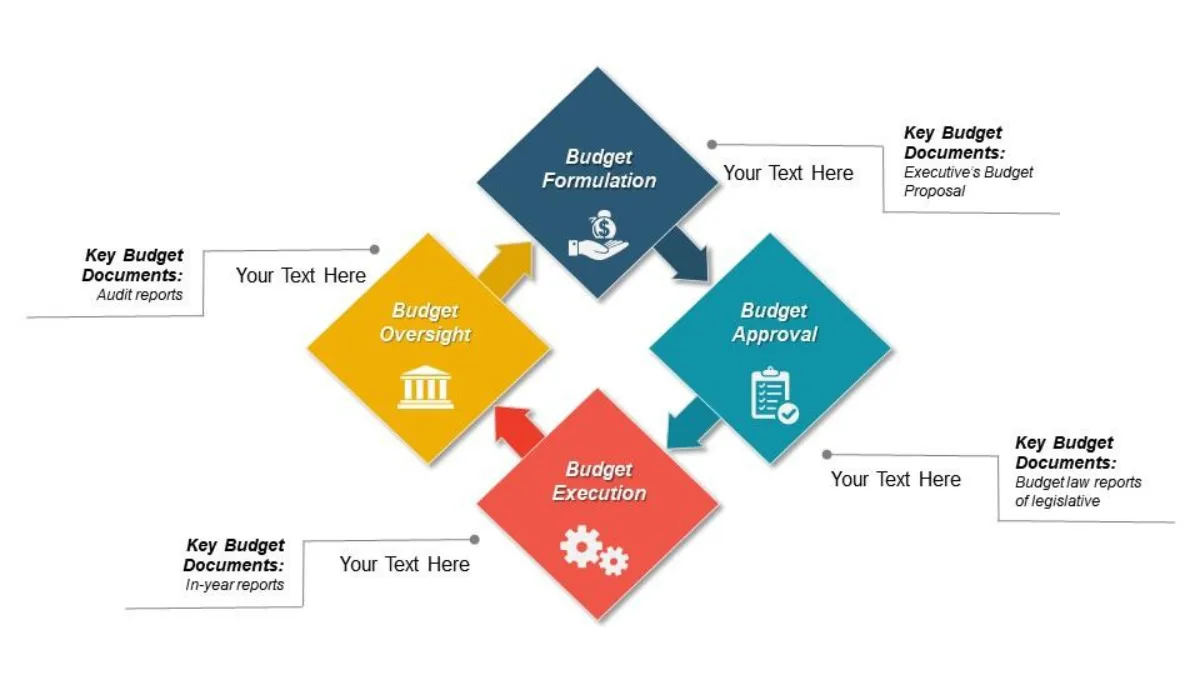
Key Stages of Budget Formulation India
- Budget Formulation (Executive Stage)
- Budget Approval (Legislative Stage)
- Budget Execution (Implementation Stage)
- Audit & Accountability (Post-Implementation)
Aspirants must understand that budget formulation India is not just drafting numbers—it is policy prioritization in financial terms.
Practical Framework
Step-by-Step Approach to Writing Answers
Use this 4-stage framework in every answer:
1. Introduction (Definition + Constitutional Basis)
- Define budget process briefly
- Mention Article 112
2. Core Body (Stages in Sequence)
- Formulation → Approval → Execution → Audit
- Add 1–2 lines of function for each
3. Analytical Layer
- Mention issues (delay, fiscal deficit, transparency)
- Link with governance
4. Conclusion
- Reinforce importance of structured policy planning
Example Answer Structure (10 Marker)
Question: Explain the Union Budget Process in India.
Answer Structure:
Introduction:
The Union Budget Process in India refers to the systematic procedure through which the government estimates revenue and expenditure for a financial year under Article 112.
Body:
- Formulation Stage: Ministries submit estimates; coordinated by Ministry of Finance
- Approval Stage: Presented in Parliament; discussion, voting, passage
- Execution Stage: Funds allocated and utilized by departments
- Audit Stage: Reviewed by CAG and Public Accounts Committee
Conclusion:
The Union Budget Process in India ensures fiscal discipline, transparency, and accountability in governance.
Mistake vs Correct Approach
| Mistake | Correct Approach |
|---|---|
| Writing only definitions | Explaining stages sequentially |
| Ignoring Constitution | Mentioning Article 112 |
| No structure | Using 4-stage format |
| No analysis | Adding governance linkage |
| Over-explanation | Precise, exam-focused writing |
Model Answer Snippet (High-Scoring)
“The Union Budget Process in India is a multi-stage mechanism involving formulation by the executive, approval by the legislature, execution by administrative agencies, and audit by constitutional authorities like the CAG. This process ensures fiscal accountability and aligns public expenditure with policy priorities.”
Common Errors
1. Confusing Budget with Economic Survey
- Budget = Financial statement
- Economic Survey = Analytical document
2. Ignoring Legislative Role
Many answers skip Parliament’s role, which is critical.
3. Missing Key Terms
Not using terms like:
- Finance Bill
- Appropriation Bill
- Fiscal deficit
4. No Stage-wise Clarity
Writing in paragraphs without sequence reduces marks.
5. Overloading with Data
Unnecessary statistics without explanation weaken answers.
Tactical Application
How This Improves Marks
- Better Structure = Higher Presentation Score
Examiners reward clarity and flow. - Stage-wise Writing = Analytical Depth
Shows understanding beyond memorization. - Use of Keywords = Content Value
Words like “Appropriation Bill” and “CAG audit” increase answer quality. - Linking with Governance = GS Relevance
Helps in GS Paper 2 and Essay.
Improvement Plan
Daily Execution Strategy
Day 1–2: Concept Building
- Understand all 4 stages
- Write short notes
Day 3–4: Answer Practice
- Write 2 answers daily
- Focus on structure
Day 5: Evaluation
- Compare with model answers
- Identify missing stages
Day 6: Revision
- Memorize keywords
- Practice introduction and conclusion
Day 7: Mock Test
- Attempt full-length question
- Apply time management
Weekly Plan
- Week 1: Budget basics + structure
- Week 2: Practice PYQs
- Week 3: Add analytical layer
- Week 4: Full revision + mock
Internal Linking (For Vue Times)
- [How to Write High-Scoring GS Answers]
- [Indian Economy Answer Writing Strategy]
- [Fiscal Policy in India Explained]
More Read

Conclusion
The Union Budget Process in India is not just a financial exercise but a structured governance mechanism that reflects policy priorities and economic direction. For exam aspirants, mastering this topic requires clarity of stages, structured presentation, and analytical linkage. A well-written answer that clearly explains the Union Budget Process in India can significantly improve scoring in GS papers.
Final Insight
At The Vue Times, the focus is simple: helping aspirants convert knowledge into marks. The Union Budget Process in India is not a topic to memorize—it is a structure to apply. When you begin to think in frameworks, write in stages, and present with clarity, your answers stop blending in and start standing out.
Every high-scoring answer follows a pattern: clarity of concept, precision of structure, and relevance to the question. This is not a skill developed overnight—but it is a system that works when applied consistently.
If you are serious about improving your GS performance, start practicing with intent. Use structured frameworks, refine your presentation, and evaluate your answers critically.
FAQ’s
1. What is the Union Budget Process in India?
It is the procedure through which the government prepares, presents, approves, and implements the annual financial statement.
2. Which Article governs the budget?
Article 112 of the Indian Constitution.
3. What is budget formulation India?
It is the stage where ministries prepare estimates and the Ministry of Finance consolidates them.
4. What is the role of Parliament in the budget?
Parliament discusses, modifies, and approves the budget through voting and passing bills.
5. Why is the budget process important for exams?
It is frequently asked in GS Paper 2 and GS Paper 3 and tests governance understanding.